
• spellingAs English children prepare for their new spelling and punctuation tests, It makes me wonder about the outcome of all this testing.

    The testing of children is one-sided and far too academic. Where are the art exams for eleven year olds? The music exams? The interpersonal skills exams, the cooking, the athletic, the talking and the reading for pleasure exams? These are all real skills in life that are ignored by those academics and politicians who run education and wish everyone to be like them and damn them if they aren’t.

    Those who excel in real life skills are taught by the education system that they are failures, that spelling and punctuation is all that matters, followed closely by maths and the cold analysis of text. Fail in those and you are a failure.

    If those who excel in tests – those who go on to become politicians, set the tests and run education – were made to sit tests in art, drawing, gymnastics, football, astronomy, fashion, music and any number of relevant subjects, they would also know what it is like to be deemed a failure at the age of eleven.

    I am all for good spelling and punctuation, but this comes with culture. If correct spelling and punctuation are expected and rewarded, then the achievement levels will rise. If it is made the subject of do or die testing – for the school as much as for the pupil – then for every happy smiling face on results day, there will be a crying, shame-faced failure, stigmatised for the rest of their lives.

    “I’m no good at spelling,” they’ll say in their defence. “Look I’ve got a certificate to prove it!” And so the path of their lives is set for them by those to claim to have their best interests at heart.

    Neuroscience is showing us daily how different we all are, how some just see the world in a different way to others. The internet is changing the way everything is done. New, previously unheard of skills are demanded daily, and yet academics are obsessed with preserving tests relevant to the age of coal and steam.

    Let us have a level playing field. If you are not wired up for perfect spelling or number-crunching, let it be possible to show how amazingly you are wired up for the things in which you excel – the very skills that the world needs now.


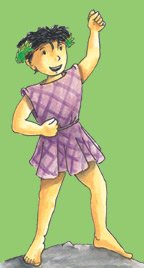
  • FeetSmallYouTube Follower, JSWHISS asked me to draw feet this week. I think hands are the hardest, but now I’m not so sure. I think I’ve been in denial about feet. If I can, I draw feet off the page or hide them behind something in the foreground, as that’s a lot simpler.

    I generally find that if in doubt, I go to see what the Ancient Greeks did as they really knew how to draw and make it simple. That’s what I did when I was drawing my Olympia books that I show in the video.

    If you were thinking of getting one or two copies, it really helps support this website and my drawing videos if you use the Amazon Links below. Thanks.

  • Olympia-Back-Cover-VignettesmlThe Olympics are well and truly over, but their legacy continues, most noticeable by the number of lycra clad bicycle riders that now clog up the roads of Britain!

    My legacy is that I learned to draw feet a little better than before. While researching for my Olympia books, I looked at a lot of drawings on ancient Greek pots. The drawings were a revelation. I’d never really looked at them closely before. The style and often the drawings themselves were drawn again and again and passed down from father to son or master to apprentice. All the time the style was refined so that graceful athletes could be portrayed in a very few stokes of the pen or inscribed with a stylus.

    I find I often go to the Old Greek Masters for inspiration and understanding of how to draw simply as well as how to understand the world in general. The old philosophers had it pretty well sorted!

    If you were thinking of getting one or two, It really helps support this website and my drawing videos if you use the Amazon Links below. Thanks.