
• We moved from The Forest, where I knew the trees and their varieties, to the beautiful Derwent valley. The noticeable change for me was in the varieties of trees.

    There are a lot of Sycamore. Members of the Acer/Maple family, they are everywhere. One book on local history referred to them as “the Derbyshire weed.”

    In the spring a small forest began to grow on my garage roof. There’s a sycamore close by and the seeds come twirling down and find the gravel on the roof a perfect seed bed. They like my flower beds too.

    I’ve been watching the seeds form this year and have noticed a huge variety in shape and size and began collecting them on walks.

    I’ve installed a nature table in my new studio, where I spread them out and look more closely.

    I was impressed by the twirling motion one sunny lunchtime, until I realised the twirlers were lime seeds from the huge trees across from us, and not sycamore.

    I compared the two seeds by throwing them into the air. The lime twirled beautifully. The sycamore dropped like a stone.

    I split the sycamore in two halves and threw them in the air. Off they went, helicoptering as f designed by da Vinci. Sycamore wings don’t fly as a pair. but individual seeds do – they helicopter.

    It’s a tiny observation in the great scheme of things, but for me there is the more important lesson about attention.

    The more you pay attention, the more you learn and understand.

    Pay attention.

    Attention is the most profitable resource on the planet these days. Google, Meta, AI and all the major platforms have built their fortunes by harvesting your attention.

    You have only so much attention to give and the more it is taken away, the less you learn and understand.

    So, turn off your phone and go and pay attention to something small that you’ve never considered before. You’ll learn and understand a lot more than you will by doomscrolling on instagram for a couple of hours.

    You can watch this video without the distractions of adverts and see full size scans of the sketches when you join me on Patreon: https://www.patreon.com/ShooRayner/posts/what-can-we-from-166271982
  • My latest video has surprised me. The views are down, which might be because it’s the summer vacation time, but the engagement is up. Viewers are watching quite a bit longer than the average video.

    It is definitely more philosophical, but that is the direction that interests me at the moment and where I want to go.

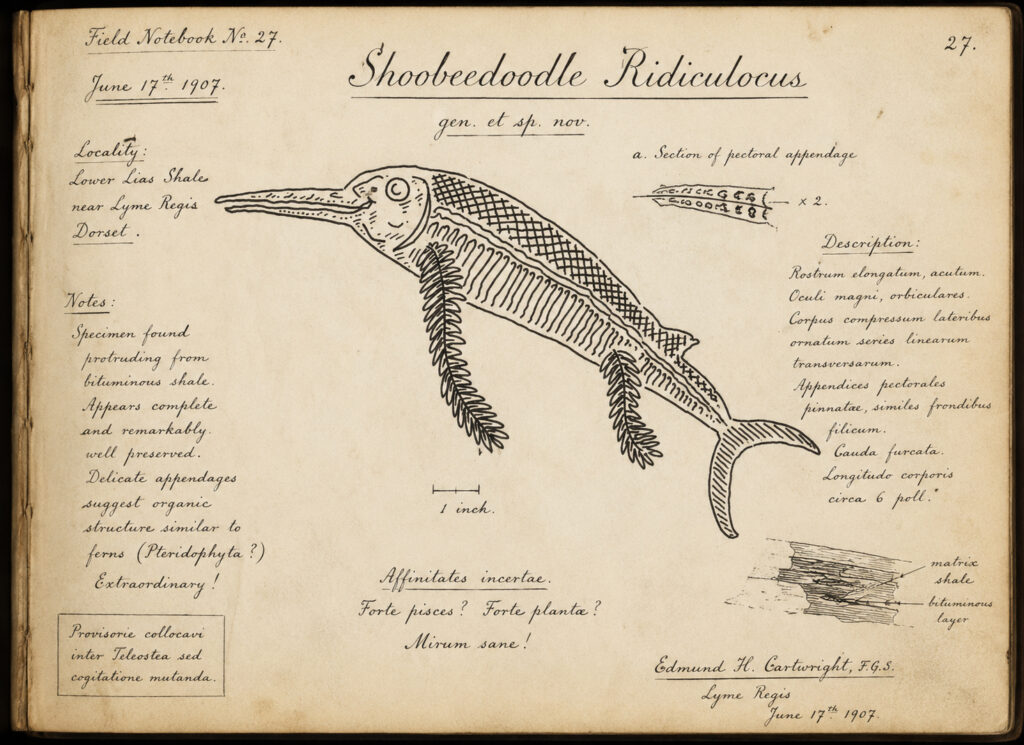
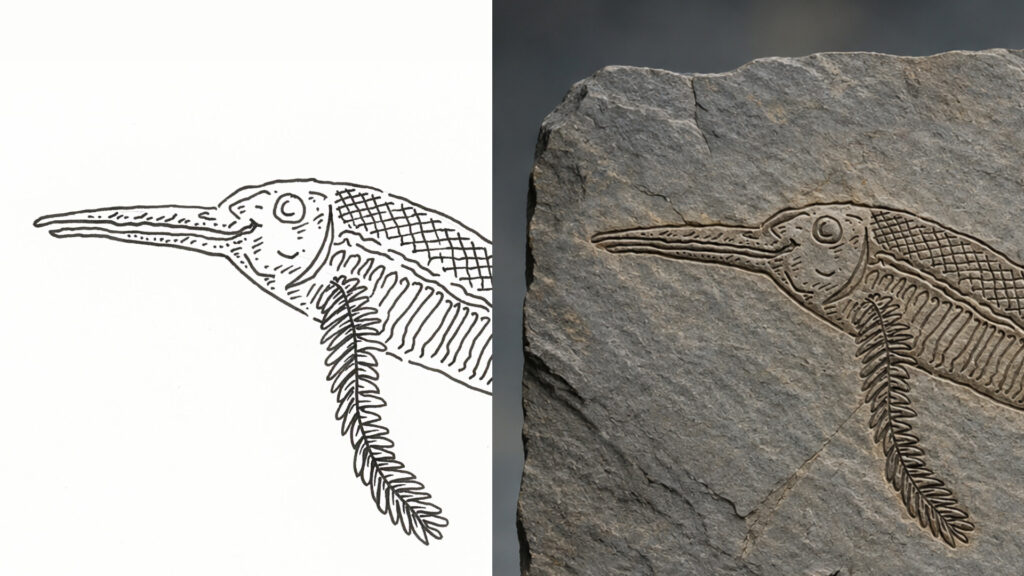
    The fossil field book developed by Chat GPT

    Like may creative people, I’ve been in the doldrums thanks to the incredible ability of AI to create what, to most people, looks like amazing art.

    But WE know better, don’t we?

    But is it as simple as human good and AI bad? Can AI be a tool to develop human ideas?

    Writing was seen as the end of civilisation when it superseded the oral tradition, but we seem to have survived the transition. Will we survive AI and come out the other side with a whole different idea of creativity?

    Is AI just a tool or is it something else? In this video I develop an idea on paper and then move it on with AI. It does a great job that could easily be used as an illustration in a book or any where else.

    Where was the creativity?

    Was it me or was it ChatGPT?


  • Can you really draw anywhere?

    I took my sketchbook with me on a family day out to a farm park with my two-year-old granddaughter. Like most outings with small children, we spent far more time in the playground than looking at the animals. So while she climbed, explored and refused to keep her sun hat on, I took out my sketchbook.

    Drawing children in public is an odd business these days. As a grandfather, people understand why I’m there, but it reminded me how different the world is from the one Shirley Hughes described to me many years ago. She once told me, “Draw every day.” It was advice she lived by, sketching children in the shared gardens where she lived in London. Today we often have to be a little more discreet.

    As I drew, I noticed something unexpected. Beneath the playground slide were tiny tree saplings growing happily in the shelter of the structure. They looked like perfect miniature trees, protected from little feet by the slide above them. They probably won’t survive. Eventually someone will pull them up because, after all, a weed is simply a plant growing in the wrong place.

    That little scene stayed with me.

    Later, while I painted the sketch back in the studio, I realised the drawing wasn’t really about my granddaughter or the playground at all. It was about attention.

    I’m beginning to think that’s where art starts.

    When we sketch, we’re choosing to give our attention instead of having it demanded by the endless distractions of modern life. A sketchbook doesn’t ask for anything. It simply invites us to slow down, notice and remember.

    The drawing itself is almost secondary.

    It’s the evidence that attention happened.

    This idea has been growing in my mind over the last few months, and I suspect it’s going to become an important part of these videos. I’m still working it out, but I hope you’ll enjoy exploring it with me.